
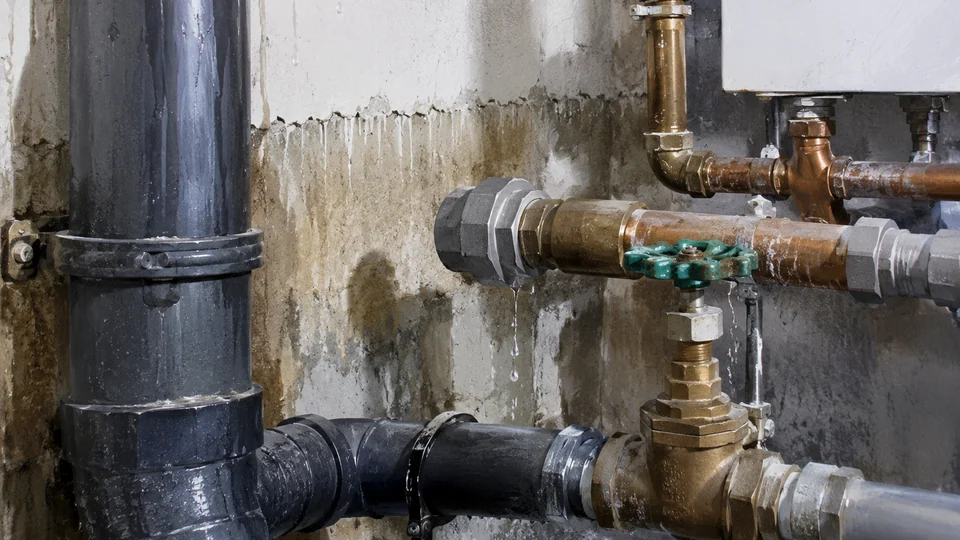
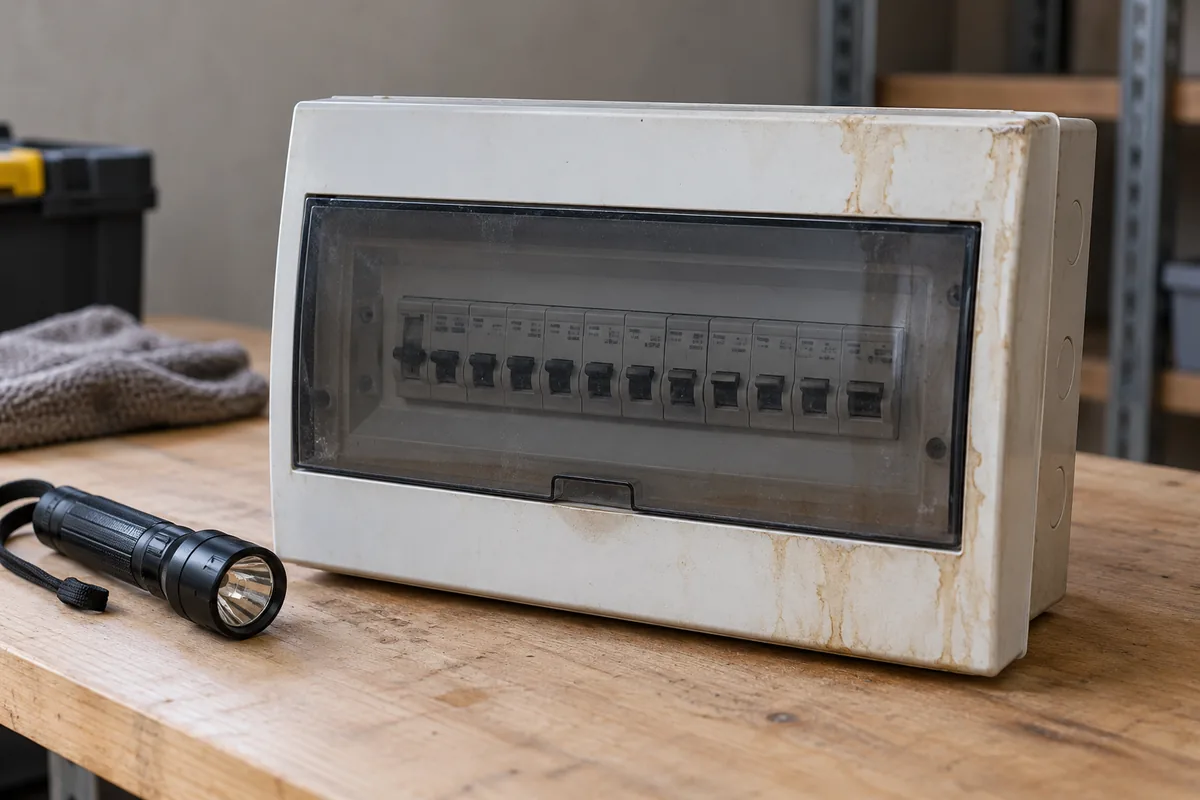
After a leak, signs of water in the panel warrant checking safety and technical condition, but do not in themselves establish that all the apartment's wiring needs replacement. Two tasks must be addressed separately: preventing unsafe use and preserving information that allows examination of the cause and extent of the damage.
Do not energize for testing
Do not touch wet electrical devices or open an energized panel for a photograph. If there is a risk of electric shock, sparking, a burning smell or continuing water ingress, contact the emergency service. De-energization and subsequent checks are performed by a specialist with appropriate training.
A dry housing surface does not establish that internal components are safe. Switching the power back on “for a minute” may create a new fault and alter the original signs.
What to document without intervention
- An overall view of the leak location and the panel's position in relation to signs of water.
- The times of the incident, discovery and power disconnection, if known.
- Which sections stopped working and when this was noticed.
- Records from the emergency service, property management organization and electrician's visit.
- All subsequent actions: drying, dismantling, cleaning and device replacement.
Distinguishing observation from assumption
A stain on a cover, corrosion at a specific connection and an unsatisfactory electrical measurement result are different kinds of information. The record should identify the location of the sign and the conditions in which it was found. The phrase “everything was flooded,” without describing the components, does not allow the basis of a restoration work list to be checked.
What a specialist examines
Depending on the task, inspection, connection checks, tests and measurements, and examination of the diagram and documents may be required. The operations are selected after assessing the object and safe access. Existing defects, the panel's design, the route of water ingress and interventions performed affect the result.
When equipment is replaced, removed components are preserved where possible and each is linked to its installation location. Storage and subsequent transfer arrangements are agreed with the specialist: components may be contaminated, damaged or retain hazardous properties.
How to substantiate restoration
A decision to replace a specific component is linked to its established condition, requirements for its continued operation and verification results. The estimate distinguishes emergency measures, inspection and restoration work. The mere occurrence of a leak does not substantiate every proposed upgrade to the electrical installation.
Before the examination begins, prepare a diagram of accessible circuits, photographs taken before and after the incident, and documents for the work performed. If the panel has already been completely replaced, state this: document-based examination has different capabilities from direct inspection of the preserved object.